
All visits by appointments Dismiss
Skip to content
Choosing the correct pergola size is not a minor decision; it directly affects comfort, shading effectiveness, furniture layout, and the overall harmony of your outdoor area. Many homeowners underestimate this step, leading to spaces that feel either cramped or oversized. In most cases, design issues arise not from installation or material quality, but from relying on standard measurements instead of considering the actual proportions of the site.
Pergola size plays a critical role in how the space is used on a daily basis. A structure that is too small restricts movement, limits furniture arrangements, and can quickly feel confined. On the other hand, an oversized louvered pergola may dominate the area and appear disproportionate to the home. Proper dimensions also affect airflow, sun control, privacy, and how clearly different zones – such as dining, lounging, cooking, or a Jacuzzi area are defined. Careful measurement is essential, even for compact patios or suspended pergola designs.
Most contemporary aluminum pergolas are available in standardized dimensions designed to suit a wide range of outdoor settings. Typical widths fall between 10 – 20 feet, while depths commonly range from 8 – 16 feet. Standard pergola heights are usually set between 8 – 10 feet, although municipal bylaws in Ontario may restrict height without a permit.
Measuring your space for a pergola involves more than just noting the floor area. Consider the surrounding environment carefully:
Many measurement mistakes happen when installers or designers forget to include the additional height of fasteners or neglect the space required around structural supports.
Choosing the right pergola size goes beyond visual appeal; it is a strategic decision that influences comfort, functionality, and long-term satisfaction. A well-proportioned pergola offers ample shade while preserving an open, inviting feel, ensuring furniture fits comfortably without overcrowding. Conversely, an ill-sized structure can restrict movement or complicate installation. Key factors to assess apply to all pergola types, whether you are planning a cozy patio model or a large, custom aluminum or louvered system.
When planning your pergola, leave enough clearance around the structure – ideally at least 90 cm between furniture and support posts. The intended function also affects the dimensions:
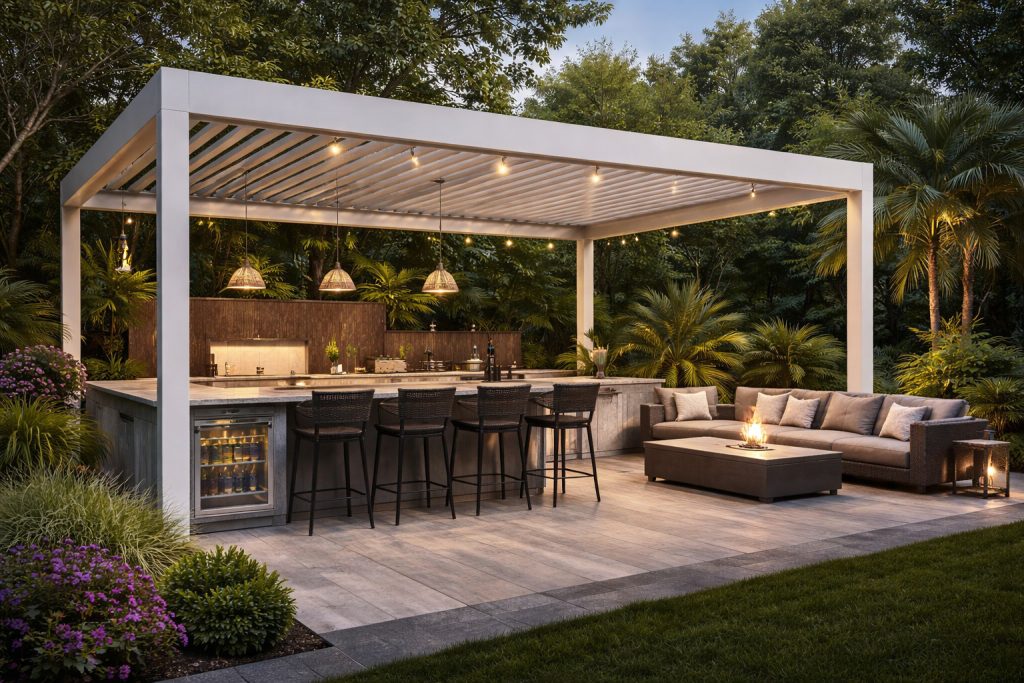

Before finalizing dimensions, visualize the space with all intended furniture – loungers, sofas, and hammocks to determine the ideal pergola size. Also, consider traffic flow to ensure ease of movement.
Understanding pergola sizes helps you choose a structure that fits your outdoor space while meeting functional needs. The table below highlights common dimensions, the types of areas they suit best, and how each size is typically used in real-world settings.
| Pergola Dimension | Type of Space | Ideal Use | Notes |
|---|---|---|---|
| 8 × 8 ft | Small patios, decks | Coffee corner, small seating | Perfect for compact patios and deck areas |
| 10 × 10 ft | Compact yards | Bistro table, 2–3 chairs | Popular standard-size pergola |
| 12 × 14 ft | Medium backyards | Dining for 4–6 people | Balanced proportions |
| 12 × 16 ft | Medium–large patios | Lounge or sectional sofa | Ideal for louvered roof systems |
| 14 × 20+ ft | Large gardens | Outdoor kitchen or hot tub | Requires sturdy foundation and larger budget |

Aluminum and louvered pergolas are easier to plan, thanks to their modular design and precise measurements. They are snow-resistant, require no bulky wooden posts, and use standard module increments, making layout decisions simpler.
For motorized systems, remember to factor in the height of the drive unit and necessary service clearances. While standard sizes suit most properties and are cost-effective, custom pergolas are ideal for irregular spaces, maximizing coverage, or ensuring alignment with challenging façades – especially for larger installations or unique outdoor designs.
After selecting the ideal size, choose the right model and material. RT Louver Pergola’s aluminum systems combine durability, weather resistance, and a sleek, modern design with minimal maintenance.
Optional features like motorized louvers, rain sensors, and integrated drainage further enhance functionality.
Contact RT Louver Pergola for a personalized consultation to ensure your pergola fits perfectly, provides optimal coverage, and delivers long-lasting performance for your outdoor living space.